Populist Merkel Has Left, But Germany Isn’t in Great Shape
- 17 prosince, 2021
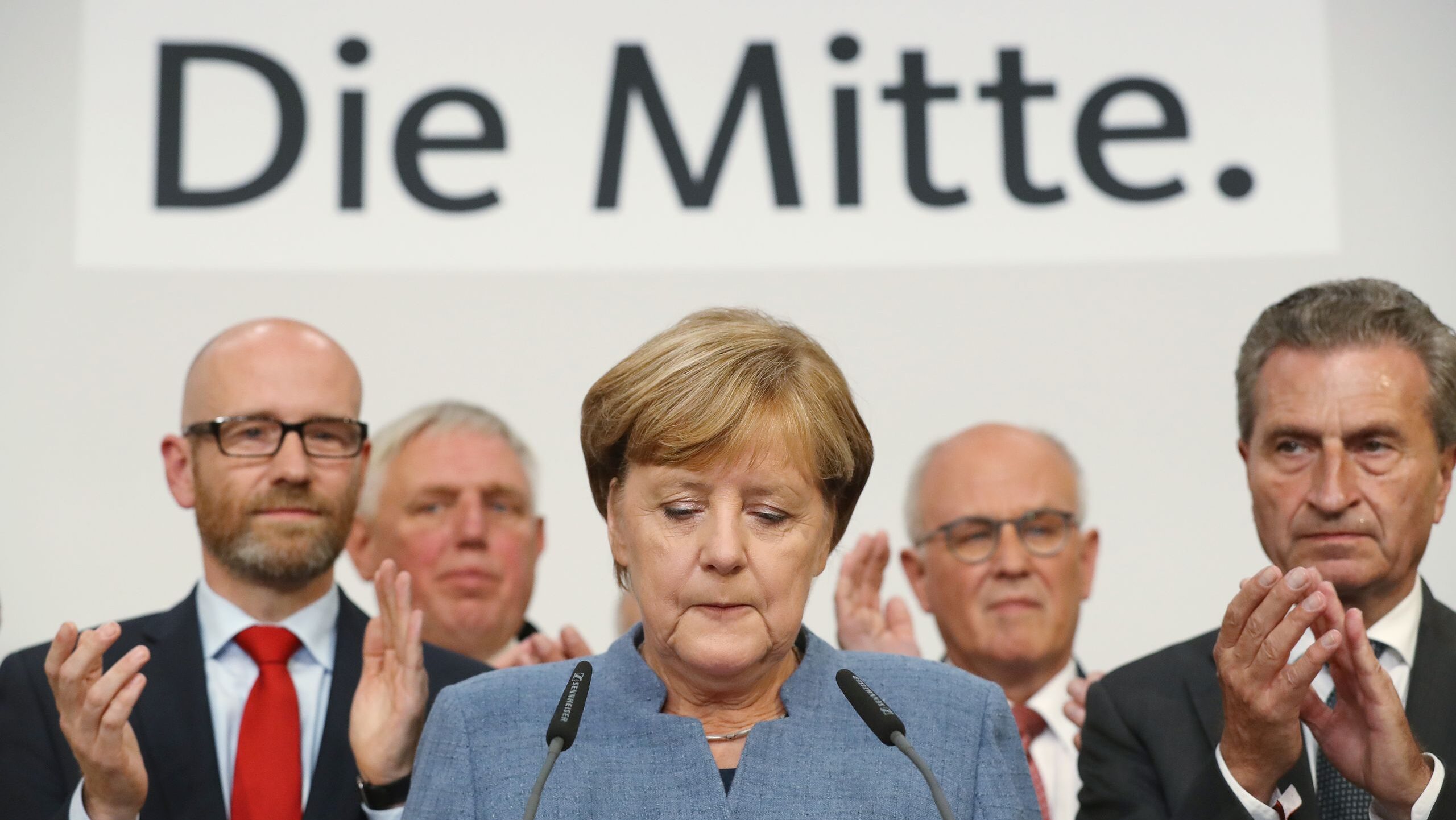
German Chancellor Angela Merkel has finally stepped down after sixteen years in office. Most commentaries sound eerily similar to the praise typically given to leaders of the Presidium of the Supreme Soviet after they passed away—her era was one of prosperity, progress, stability, and Germany’s friendship with the Czech Republic will be sorely missed. Of course, this comparison is a huge exaggeration; there’s a clear distinction between an authoritarian dictator, like those who maintained an occupying army in our country, and a democratically elected leader. Nevertheless, the tone of these reflections on her rule—unquestioning and bordering on sycophantic—is hard to ignore.
It’s interesting to compare this with how the media treats leaders they dislike. For instance, former U.S. President Donald Trump comes to mind. Personally, I don’t like how he speaks, dresses, or styles his hair—I certainly wouldn’t want to be stranded on a deserted island with him. But the bitterness of commentators who refuse to acknowledge his contributions to the American economy, the rapid development of the COVID vaccine, and his commitment to his campaign promises is striking. He is labeled as a populist who simply told his voters what they wanted to hear. Yet if we’re looking for an example of a true populist, we’d be hard-pressed to find a better one than Angela Merkel. Few leaders in modern history have been as quick and willing to cater to the shifting moods of public opinion or, in Merkel’s case, the German media.
Some of her supporters might argue, “Angela, a populist following public opinion? Didn’t she courageously open Europe’s doors to over a million migrants during the 2015 migration crisis?” It wasn’t as straightforward as it seems; much of what happened then has either been forgotten or clouded by ideological baggage. Although the civil war in Syria had been raging for four years and millions were already displaced, the first half of 2015 in Europe was dominated by the Greek debt crisis, not refugees. The Greek debt issue was nothing new, but radical Alexis Tsipras won Greece’s early elections, and his even more radical ally, Yanis Varoufakis, became finance minister. Varoufakis became the face of a renegotiation with creditors, threatening that Greece would pay back nothing of its borrowed debt. At the time, Merkel aligned herself with her voters’ majority opinion and took a firm stand against Greece—despite the fact that, by joining the euro, Greece and other southern Eurozone countries had effectively supported Germany’s economic success by making their own exports more expensive and German exports cheaper. During this period, in July, Merkel was still a resolute German chancellor, a stance that extended to an encounter with Palestinian migrant Reem Sahwil, who explained emotionally why she didn’t want to leave Germany after originally coming there for medical treatment. Merkel patiently and rationally explained why it wasn’t possible to allow everyone who wanted to come to Germany to do so. Her words are worth recalling: “You’re sitting here in front of me, and you’re a very nice girl, but you surely know that in the Palestinian refugee camps in Lebanon, there are thousands and thousands of people, and if we now say, ‘Everyone can come,’ and everyone from Africa can come too, we couldn’t cope with it. We face this dilemma. The only answer is to speed up the decision-making process. But some people will have to go back,” she said.
Does this sound like the “Mutti” of all the world’s migrants, or more like something Tomio Okamura would say? But Merkel’s statement was followed by a wave of negative reactions criticizing her as cold and unfeeling. The German media united against their chancellor, and I believe this moment marked a turning point. Merkel jumped on the pro-migrant wave, seeing it as a way to boost her standing in public opinion. This shift wasn’t motivated by a lifelong stance or a point in the CDU’s election platform, which once served as a kind of contract with the voter. That was in a time when politics had substance, not just pandering to the loudest groups. Compare her two statements: “We couldn’t cope” versus “We can manage this,” uttered only weeks apart on the same issue. Does this seem like the behavior of a conservative politician? No, this is populism, where decisions and governance change according to polling trends.
Merkel’s willingness to change her positions based on media influence affected many areas, unfortunately with consequences not only for Germany but also for Europe and, by extension, the Czech Republic. In addition to the issue of illegal migration, energy security, and by extension national security, were also impacted. In 2011, an earthquake in the Tōhoku region triggered a devastating tsunami, affecting, among other things, the Fukushima nuclear power plant. Although the conditions leading to this disaster were unique to Japan and unlikely to occur in Germany, Merkel’s administration decided not to extend licenses for German nuclear plants, effectively forcing them to shut down. Again, such a drastic measure with such severe economic consequences was not part of the CDU’s platform. Like characters from the show “Pat & Mat,” each poor decision leads to a series of even worse ones. Under her leadership, Germany recklessly cut back on its military budget. Combine that with the disastrously ineffective defense minister Ursula von der Leyen, and the once-mighty German military ended up prioritizing maternity uniforms over operational fighter jets, falling behind Poland in terms of combat-ready aircraft.
Everything is interconnected; national security today is not only about the military but, more than ever, about energy security. After the successful dismantling of its own emission-free nuclear plants, Germany under Merkel turned to Russian gas. I’ll set aside the fact that natural gas extraction and transport emit so much pollution that Greta would hardly embrace Merkel if she actually paid attention in school. What truly concerns me is Germany’s growing dependence on unpredictable Russia. Through our own actions, we are voluntarily giving Russia a means to manipulate us, and only a fool wouldn’t seize that opportunity—something Vladimir Vladimirovich is not.
In some of the more sober evaluations of Merkel’s era, people commented that she understood us in the East or, at the very least, knew how to listen. In all honesty, I haven’t found any evidence of this understanding or listening manifesting in any positive outcome. The results were always in line with the idea that the East should speak up as much as it wants, but Germany will continue on its chosen path.
For me, Angela Merkel will be remembered as a power technocrat, a populist who changed positions overnight to maintain power, willing to sacrifice party colleagues who could threaten her and surrounding herself with increasingly colorless and incompetent figures. By shifting the CDU’s policies to the left and toward extreme environmentalism, she paved the way for Germany’s current government, making once-unthinkable Green policies mainstream. Her political epitaph can be summed up by her successor Olaf Scholz’s statement. This SPD politician won the election on a platform of following the same policies as his predecessor from the conservative CDU. Can there be a clearer sign of the ideological void in German politics? It’s hard to imagine.
One final note: if you’re concerned about the fate of Palestinian Reem Sahwil, wondering if she and her family were sent back to Lebanon, rest assured. Shortly after that TV debate, she openly expressed her hatred toward Jews, declaring she would love to see Israel erased from the map. Her family was then granted residency in Germany, with official statements citing their successful integration into German society.
©2024 Milan Mikulecký. Všechna práva jsou vyhrazena.