European "liberals" fear Trump while defending a hunt for Jews in Amsterdam
- 12 listopadu, 2024
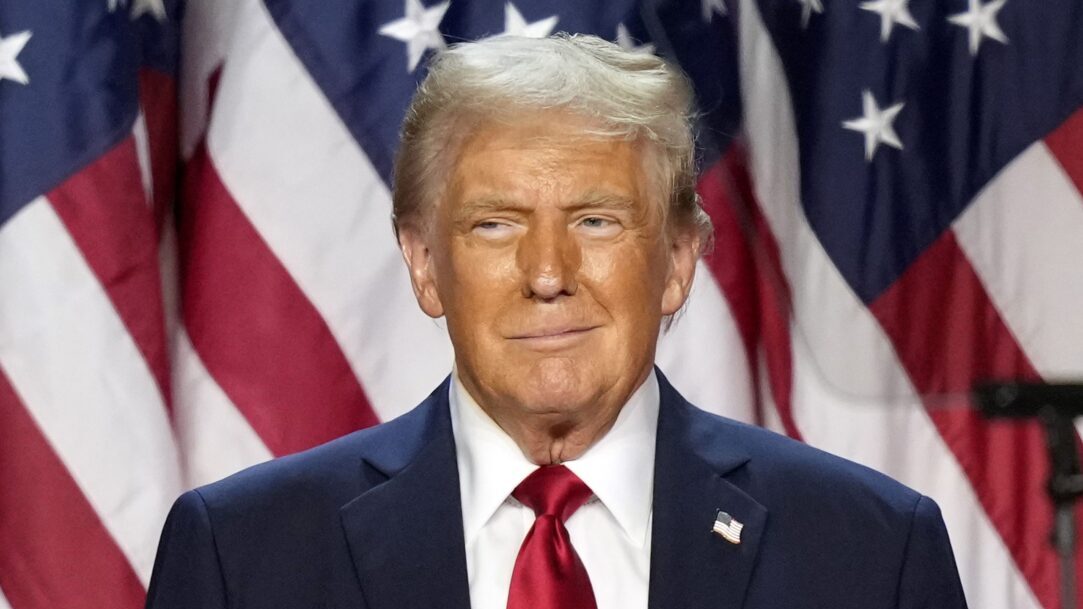
We live in strange times. The European left, which proudly labels itself as liberal, has spent days flooding us with dark visions of how the nefarious Donald Trump will „hand over“ Ukraine to Putin and, soon after, Europe itself. They claim he’ll first destroy Europe with a trade war, then unleash a nightmare on women, ethnic minorities, all genders (real and imagined), and probably even animals in the United States. No reports on squirrels and raccoons yet, but they’ll surely suffer too. The reason is evident: Donald Trump is a man, he’s white, and he’s terribly old. Not that Trump isn’t advanced in years, but mentioning the age of any candidate during Joe Biden’s campaign would have triggered fatal criticism for “ageism.” Clearly, those times are gone.
There are undoubtedly reasons to criticize Donald Trump, as there are with any other human on this planet. Some more, some less, but European media’s approach to him lacks any restraint or objectivity. Let’s start with Ukraine, not because the Russian threat is greater or lesser than the gradual economic decline of Europe, but simply because Ukraine is mentioned most often. I hope that even Trump’s biggest opponents do not hold him responsible for Europe’s demographic decline.
European critics claim Trump will strike a deal with Putin, “giving” Russia part of Ukraine to end the war. I will not go too far back into history, such as to the Munich Agreement in 1938 or the Winter War in 1939. Instead, I will present other, more recent examples where the European Union, rather than the United States, has taken the lead in handing over foreign territories in the name of so-called peace. In August 2008, Georgia decided to restore its sovereignty over its internationally recognized territory by military means, including the regions of South Ossetia and Abkhazia. Russian forces had been present in these regions since 1992, following the turbulent breakup of the Soviet Union. Officially there as „peacekeepers,“ they were in fact there to protect Russian imperial interests, particularly securing the southern foothills of the Caucasus. Moreover, evidence that Russia’s involvement was far from peaceful is shown by the fact that after 2008, Russian “peacekeeping” bases overnight became Russian military bases, without any change in personnel, equipment, or anything else.
We may have our own opinions about Georgia’s attempt to restore control over its territory, but from the perspective of international law, this attempt was entirely legitimate. Given the disparity in forces on both sides and the truly massive deployment of the Russian military under the pretext of protecting the “Russian-speaking minority” (it’s peculiar how Vladimir Putin continually takes pages from Adolf Hitler’s playbook), a ceasefire was declared after five days of fighting, brokered by the European Union. This ceasefire is sometimes known as the Six-Point Peace Plan. Out of these six points, only one was actually implemented: the Georgian army withdrew from both regions, which are still controlled by Russian puppet regimes and are, in effect, still occupied by Russia. In return for the loss of territory, Georgia received today’s fragile peace. So much for European negotiating abilities in the Caucasus region.
Next in line was Ukraine. Ukraine is theoretically an immensely wealthy country, but unfortunately, throughout its modern existence, it has been systematically plundered by foreign powers, which also occasionally practiced a form of genocide on its territory. First came the international socialist regime of Russia in 1932–1933, where the death toll is estimated between three and seven million, followed by the national socialist regime of Germany, which, between 1941 and 1944, is estimated to have added another seven to eight million victims to the list. When Ukraine gained the chance for true independence after the collapse of the Soviet Union, it, like many other Eastern European countries (including Russia), fell prey to various local mafia clans that infiltrated the government, security forces, and nearly every sector. When there was nothing left to steal and people’s patience wore thin, public protests led to the flight of pro-Russian President Viktor Yanukovych from the country on February 22, 2014 (notably, to Russia), and it seemed there might still be hope. However, that hope was brief, lasting only a few days, as Russia invaded Ukraine on February 26, 2014. It began with the occupation of Crimea and continued in April in the Donetsk and Luhansk regions, following an old Nazi playbook. Under the pretext of protecting Russian-speaking minorities, there was a “spontaneous” uprising of residents against the Ukrainian government. In reality, many of the armed individuals were not local militants but members of Russian intelligence services and soldiers from the Russian regular army.
It is essential to remember that Russia’s bloody war against Ukraine did not begin in 2022 but eight years earlier. And what did Europe, its strongest countries, and its most powerful politicians at the time do back in 2014? The same Europe that now fears the newly elected American president might “sacrifice” Ukrainian territory instead of fighting for Ukraine? They negotiated the Minsk II agreement. After Minsk I, mediated by the Organization for Security and Cooperation in Europe, became a worthless piece of paper upon signing, the “heavyweights” of European politics and media darlings who now harshly criticize Donald Trump stepped in. The French-German duo of François Hollande and Angela Merkel arrived in Minsk. Together, hosted by the “potato dictator” Alexander Lukashenko, they famously negotiated Minsk II with Ukrainian President Petro Poroshenko and Russia’s Vladimir Putin. Why Putin, when everyone insisted this was an internal Ukrainian conflict that Russia was supposedly not involved in, was never explained, and Hollande and Merkel apparently forgot to ask.
At that time, Europe was more interested in lucrative deals with Russia than in any Ukrainian cause. It prioritized cheap resources for Germany’s hungry industry, the construction of gas pipelines that enriched both former and current German politicians, as well as numerous “non-profit” and “green” organizations. I could probably end here regarding Europe’s “concerns” over anyone but itself bargaining with foreign territories, but I cannot. Another frequent argument is that the Trump administration is allegedly willing to abandon the defense of European NATO members.
One can’t help but wonder—shouldn’t the European members of the alliance be primarily responsible for their own defense? Does the European Union, with nearly 450 million inhabitants, who rightly fear a Russia of barely 145 million, truly depend on the protection of some 60,000 American servicemen and women stationed in Europe? And if so, does Europe contribute to the cost of hosting these soldiers, who are essentially providing security so that Europeans don’t have to handle it themselves? The answer is no, they do not. The financial contributions that some host countries make toward infrastructure projects, which American forces then use, fall far short of covering the expenses that American taxpayers incur for these forces. Yes, the United States has an economy roughly 49% larger than that of the EU (based on nominal GDP in 2023), but the disparity in our defense spending, in our willingness to take action when our security is threatened, is striking. This isn’t just about Russia; it’s also about protecting our interests regarding issues like freedom of navigation in the Red Sea. The difference is glaringly obvious.
If Europe has essentially given up on its own defense and is unwilling to engage in areas crucial to our future, then we have no right to criticize the United States, regardless of whether a Democratic or Republican administration is in power, if they find this way of „sharing“ costs unacceptable. This brings us seamlessly to another frequent criticism of the incoming president—his supposedly planned trade wars.
If you’re interested in the details of mutual tariffs, I’ll refer you to one of my earlier commentaries and spare you the repetition. Instead, I’d like to briefly highlight that many of the deficiencies in the European economy stem from completely misguided political decisions—our own, European decisions. Often, these decisions were made by politicians without a direct electoral mandate but rather under pressure from various extremist yet vocal and media-favored lobbying groups. It doesn’t matter whether it’s the closure of nuclear plants in Germany, the brutal rise in energy prices as a result of the forced shift to intermittent energy sources, or the dismantling of a core European industry—internal combustion engine vehicle production—due to regulations that defy physical laws but are “correctly” green.
I could go on about a host of bureaucratic regulations, in which certain EU mandarins take great pleasure, that stifle critical innovation in IT fields. Europe still has plenty of well-educated and capable people in these areas, yet they have fewer opportunities at home, leading many to move to, yes, the USA. Speaking of trade wars, if I’ve seen any lately, it’s the one (not that Europeans asked for it or chose it in free elections) that European bureaucratic structures have launched against various American tech giants. Oddly enough, these bureaucrats seem notably more deferential toward their Chinese counterparts.
A sort of figurative cherry on top in this regard was the social media duel between Czech European Commissioner Věra Jourová and Elon Musk. In short, the Commissioner began lecturing Musk on antisemitism and invited him to visit the former Nazi ghetto Terezín. The desperation in the work of European commissioners with resources, including public ones, is evident from the fact that Elon Musk had already visited the former Nazi extermination camp Auschwitz ten months before her invitation. And well, this is how things often go in the seats of European institutions.“
Perhaps if Ms. Jourová and her colleagues stepped out of their world of palaces for unelected officials, armored limousines, and taxpayer-funded private jets for a moment, they might realize that it’s not social network X that has such a problem with antisemitism, but Europe itself. And it doesn’t necessarily have to be the infamous Brussels district of Molenbeek. It’s enough to visit Amsterdam at the wrong time. Such a wrong time could be, for instance, when an Israeli football team is in town, and you risk being lynched by an Islamist mob, regardless of whether you’re Jewish, Ukrainian, or a Brit who dared to help an attacked Jew.
In this regard, one couldn’t help but notice the victim-blaming of the Amsterdam pogrom victims. The same people who endlessly remind us of the never-ending sins of the white man—often for actions committed hundreds of years ago—suddenly began convincing us that the lynched Israelis were, in a way, partly responsible for their fate. This started as early as Friday morning, initially on pro-Russian and pro-Palestinian accounts, with attempts to both relativize the violence and claim that the Israelis had instigated it, since they were supposedly football hooligans. Football has never interested me, much less the fan culture surrounding it, so I reached out to friends familiar with that environment. Yes, the hardcore fan base of Maccabi Tel Aviv includes a significant number of troublemakers. Yes, as I’ve been told, these people often chant slogans that, in my opinion, are racist, foolish, and offensive. But so do hardcore hooligans from anywhere else in the world. However, what happened in Amsterdam was not a clash between fans of Maccabi Tel Aviv and Ajax Amsterdam; it was a carefully planned pogrom by Islamist militias.“
It’s not true that Israelis were ravaging the city. According to verified footage so far, we know of one Palestinian flag being torn down from a house and a few Palestinian flags being burned. We know of anti-Palestinian slogans being chanted. We know of disrespect during the moment of silence at the stadium. None of this justifies a lynching, as some ‚liberal‘ journalists and commentators now seriously claim. It’s pointless to ask how many Israeli flags have been burned in European and American cities, yet no one ever thought of taking that as permission for a lynching. And let’s not even mention the chants in our streets under the flags not only of Palestine but of various terrorist organizations, about wiping out either Israel or our Western society. Again, this was a premeditated pogrom, involving many accomplices of those young men in black, from taxi drivers to hotel receptionists who helped identify Israelis for them, regardless of whether they had even attended a football match. It was a pogrom that had nothing to do with football; the attackers didn’t carry Ajax flags, but Palestinian ones. The chants weren’t for a football team, but for Palestine. This could go on endlessly, but it’s pointless. For all the excuses made for the attackers, dressed up as ‚providing context,‘ it’s telling that a public broadcaster’s reporter, as she expressed on X, apparently found it provocative that ‚Israeli fans were marching through the city.
By the way, in Prague, fans of football teams march through the city before every major football match, and, surprisingly, no one has yet thought to use it as an excuse for throwing random members of an ethnic group into the river or beating them up. Nor as a justification for any form of violence.
Let’s face it: Europe’s problem isn’t Donald Trump; it’s our own cowardice toward Russia and our own cowardice toward the people we’ve let in, who openly despise us. Our problem is our economic stagnation due to our own often utterly nonsensical regulations and restrictions. Let’s take care of our own responsibilities, whether in terms of energy, internal and external security, and stop dismantling our own energy sector and economy. Let’s make Europe great again.
©2024 Milan Mikulecký. Všechna práva jsou vyhrazena.