Occupier or Liberator? In Lebanon, the Answer Is Far From Clear.
- 24 září, 2026
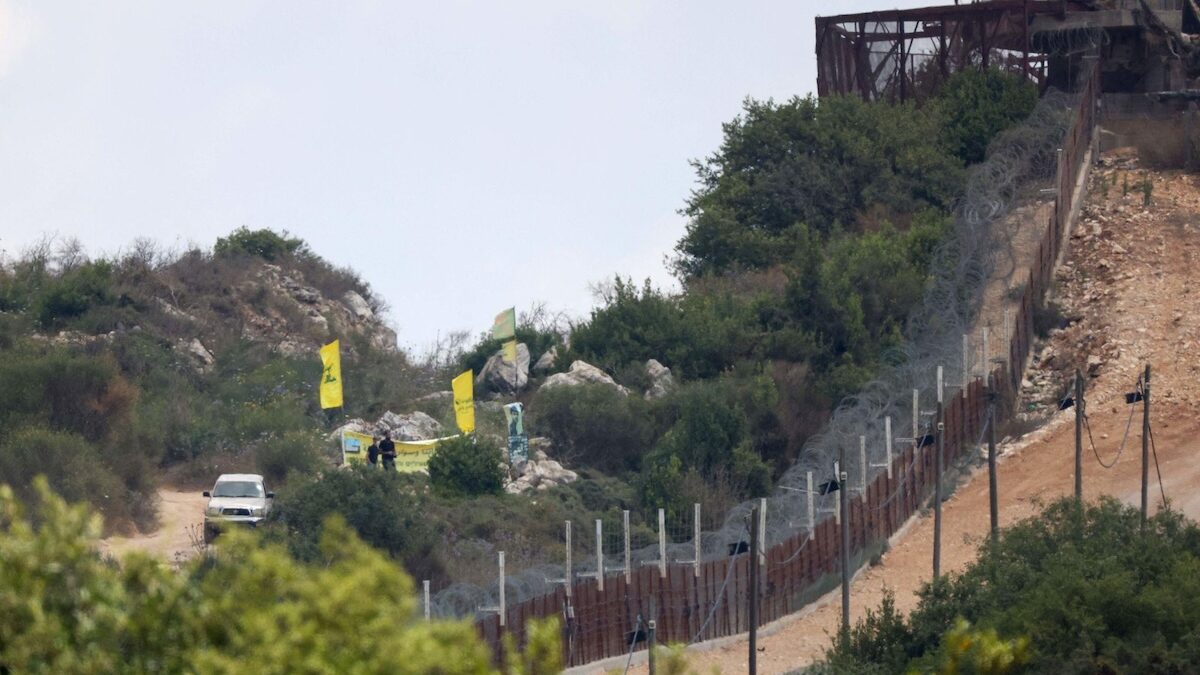
Lebanon has once again disappeared from media attention. Yet as recently as early June, for example, French President Emmanuel Macron was personally and vocally calling for an end to the fighting between Israel and Hezbollah terrorists. At the time, the terrorists were not only losing but also retreating desperately, and no one could be sure where Israel’s advance would stop. Not only the French president but also a number of media outlets described Israel’s advance, launched in an effort to put an end to the daily deadly attacks coming from Lebanon, as an occupation. It occurred to me to briefly consider who in Lebanon is the occupier and who is the liberator.
Lebanon, once a flourishing country that has unfortunately spent several decades struggling through the hell of seemingly endless conflicts, originally emerged as a compromise among religious groups. It all really began in the years 1858–1860, when bloody clashes broke out in the Ottoman Empire around Mount Lebanon, killing thousands of Christians. It is also worth noting that the Christian communities in the territory of present-day Lebanon are older than Islam, and some of them have a continuous history reaching back to the late Roman and Byzantine periods.
The Ottoman Empire, by then already on an unstoppable downward trajectory, eventually intervened against the violence, but the crisis also opened the door to intervention by European powers led by France. The result was the autonomous Mount Lebanon Mutasarrifate in 1861, still under Ottoman sovereignty but governed by a Christian governor and an administrative council composed according to the representation of the individual religious communities.
After the end of World War I and the effective collapse of the Ottoman Empire, French influence in the area increased, and France significantly expanded the territory. Since then, France has also come to regard itself definitively as a kind of protector and guardian of Lebanon. On September 1, 1920, General Henri Gouraud proclaimed Greater Lebanon — Grand Liban. Beirut and other coastal cities, the north including Akkar, the Beqaa Valley, and other areas were added to Mount Lebanon. At that point, the borders of present-day Lebanon were essentially defined.
The problem was that France’s logical effort to create a territory large enough and economically viable enough to have ports, agricultural land, and strategic depth also meant incorporating other ethnic and religious groups that did not always share the same view of the direction the state should take. In any case, the first census conducted in this territory showed the clearly dominant Christian character of the future country. Christians made up 56.5% of the population, Sunnis 19.8%, Shiites 16.7%, and Druze 6.9%.
Although the Lebanese Republic received its first constitution as early as 1926, I would consider 1943 the true year of Lebanon’s creation. That was when Lebanon gained independence from France, and at the same time Maronite President Bechara El Khoury and Sunni Prime Minister Riad Al Solh created the unwritten National Pact. Under this pact, the Christian majority accepted that Lebanon belonged to the Arab world and would not in the future be oriented purely toward the West. Muslims, in turn, accepted the existence of an independent Lebanon within its full territory and abandoned their demands that it be incorporated into Syria. It was also at this time that the system still in place today was established: the president of the country is a Maronite Christian, the prime minister a Sunni Muslim, and the speaker of parliament a Shiite Muslim.
What followed was Lebanon’s golden age. Although the country had no oil, Beirut quickly became the financial, commercial, media, and cultural center of the Arab world. Its somewhat permissive banking system attracted capital from across the wider region. Tourism prospered, and not only tourism from Arab countries. Visiting Beirut was also seen as a mark of social status in Europe and the United States. Lebanon had the same amenities as the developed world of the time: free-thinking universities, nightlife, a vibrant press and cultural scene, and above all a degree of civil liberty that was unimaginable in the surrounding countries, with the exception of Israel. Unlike poor Israel, however, Lebanon was genuinely wealthy. Wealthy, but somewhat naive when it came to ensuring its own security. In its immediate surroundings, after all, wars were being fought almost continuously.
Lebanon took part in only one of these wars, the first war against the newly established Israel in 1948. And it must be added that it did so without much enthusiasm and, compared with Egypt, Jordan, Syria, or Iraq, rather symbolically. Essentially the only major clash, over the village of Malkiya, which lay only a few hundred yards south of the Lebanese border, ended rather awkwardly for the Lebanese army. Although the Lebanese had a six-to-one advantage in manpower and a virtually incomparable superiority in equipment, since tanks, artillery, and aircraft were deployed on the Lebanese side, the Israeli A Company of the 11th Battalion of the Oded Brigade, numbering about seventy men, had only light infantry weapons at its disposal. Nevertheless, after the village changed hands several times, the Israelis finally took permanent control of it on October 31, 1948.
As early as March 23, 1949, Lebanon and Israel signed an armistice agreement. In it, both sides committed themselves to respecting the international border and also agreed that land, naval, and air forces would not undertake hostile actions against the other side. Although no peace treaty was concluded between them and no diplomatic relations were established, until the outbreak of Palestinian terrorism this stretch of Israel’s border was by far the calmest. Calm also prevailed on the Lebanese side, and the Land of the Cedars did not participate in any of the subsequent Arab wars intended to drive the Jews once and for all into the sea.
Unfortunately, by the end of the 1960s, and especially after the crushing defeat of the Arab states in the Six-Day War of 1967, the Palestinians brought war onto Lebanese territory as well. Fatah and other Palestinian organizations began using Lebanon as a base for attacks against Israel, and because the Lebanese government and its armed forces were unable to act against the terrorists, Israel began taking action against them on Lebanese territory.
Another nail in the coffin of Lebanese prosperity was driven in 1969, when, under pressure from Arab countries, Lebanon signed the Cairo Agreement with the Palestinians. It granted Palestinian terrorist organizations considerable autonomy and allowed them to carry out attacks against Israel from Lebanese territory. By permitting the existence of an armed structure that it did not control, Lebanon de facto voluntarily gave up one of the fundamental attributes of statehood — the monopoly on legitimate armed force.
The definitive turning point then came at the beginning of the 1970s, when the Palestinians turned against one of their protectors, the Jordanian king, and attempted to overthrow him. And not exactly peacefully, but by force of arms. After many Jordanians had been murdered, their armed forces finally stopped holding back, and the Palestinians ultimately found themselves only too happy to flee to safety in Israel and, unfortunately, also to Lebanon. The now fully unleashed Palestinians, in addition to carrying out further attacks against Israel, launched a war against their new hosts, and by April 13, 1975 at the latest, Lebanon had descended into the hell of civil war.
Although the Palestinians devoted themselves primarily to fighting Christians, they did not forget about Israel either. Israel became involved on a larger scale in the already extremely complicated conflict for the first time in 1978, and especially in 1982, when it launched a massive invasion of Lebanese territory. I deliberately do not call it a war against Lebanon, because the objective was not to occupy and permanently hold the Lebanese state. The objective was to prevent further massacres of Israeli civilians originating from parts of Lebanese territory that the Lebanese government no longer controlled.
The main objective of the invasion was to destroy the Palestinians’ military infrastructure. The Israeli army advanced all the way to Beirut, which it besieged. Unfortunately, after Western intervention, Arafat and the leadership of the Palestine Liberation Organization eventually left Lebanon and relocated primarily to Tunisia. They left behind a devastated country in which, with the help of the fanatical mullahs in Tehran, a new force emerged — Hezbollah.
Unlike Arafat, Hezbollah built more than just a military force. It built a political party, a military organization, a network of schools, hospitals, charitable institutions, and social services. And those were no longer paid for only by Iran, which continued to focus primarily on supplying weapons and funding terrorist attacks. The cost of what brought Hezbollah enormous popularity in the devastated country — namely social assistance — was voluntarily taken on by idiotic Europeans and Americans.
Although the Lebanese Civil War officially ended in 1989 with the agreement concluded in Taif, Saudi Arabia, the seeds of future wars remained. The Taif Agreement called for the disarmament of all militias. Hezbollah, however, was not disarmed, and its arsenal continued to be tolerated under the argument of continuing “resistance” to Israeli occupation.
The reality was that there was no force, Lebanese or international, willing to disarm what was at one time the most powerful terrorist army in the world. This is also confirmed by the fact that after Israel withdrew from Lebanese territory in 2000, and the stated reason for “resistance” had therefore disappeared, Hezbollah did not surrender its weapons. On the contrary, under the watch and protection of UN blue helmets, it brought in new weapons, built extensive underground complexes, and above all continued attacking Israel.
In my view, the only force that has actually occupied Lebanon over the long term is the Iranian proxy force called Hezbollah. It is Hezbollah that usurps functions that belong to the state. It is Hezbollah that decides what it will allow the Lebanese army and police to do, what they may do on the territory of their own country, and where they may go. Israel, by contrast, has never sought to annex Lebanese territory. Hezbollah may not be an occupier in the strictly legal sense. But it is something equally destructive for Lebanon: an armed state within a state whose strategic decision-making is fundamentally tied to the interests of Tehran. The examples of Egypt and Jordan, after all, show that when an agreement on peaceful coexistence was reached, Israel returned territories that had been won at great cost.
I would very much wish for Lebanon and its people that Israel would free Lebanon from Hezbollah and then withdraw. I would wish for Israel to gain another stretch of border from which rockets will no longer be fired into its territory. I would wish for us here in Europe that Lebanon would cease to be yet another source of instability and migration toward us. Unfortunately, although France and the European Union officially call for the disarmament of Hezbollah and the restoration of the Lebanese state’s monopoly on weapons, they were at the same time pushing for Israel’s advance to be halted precisely when Hezbollah was under the greatest military pressure. In my view, by doing so they risk repeating the old scenario: the war will be stopped before its cause has been removed. Hezbollah will be given time to rebuild its forces, and Lebanon will remain a state that does not control all the weapons on its own territory. Especially those weapons that are effectively controlled from afar by the Revolutionary Guards in Tehran.
©2024 Milan Mikulecký. Všechna práva jsou vyhrazena.